What Is Manchego Cheese? Ages, Taste and How to Spot the Real Thing
What PDO Queso Manchego means, how semi-cured, cured and aged Manchego differ, and the three details on the rind and label that prove it's authentic.
Heads up: this guide contains affiliate links. If you buy through them we may earn a small commission, at no extra cost to you. We don't accept free products or paid placements. How we choose products.
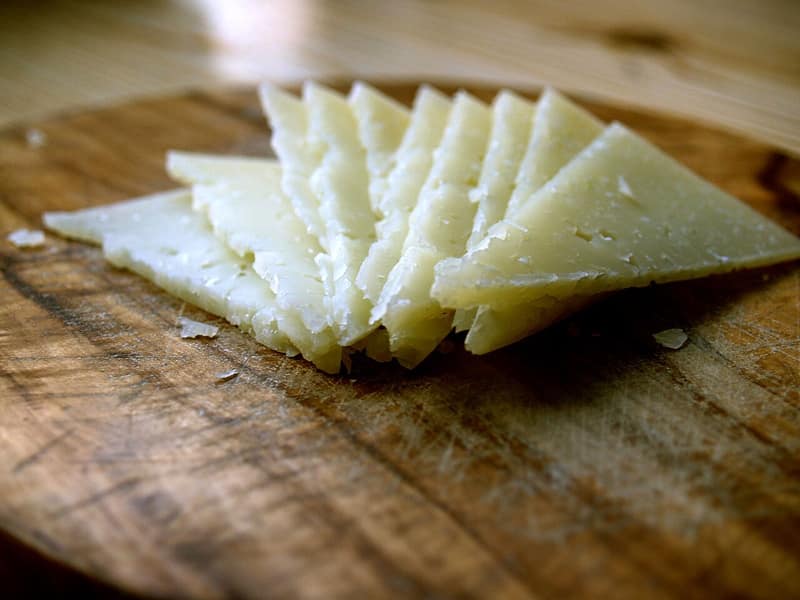
Manchego is a firm cheese made in La Mancha, in central Spain, only from the milk of Manchega sheep. It’s Spain’s best-known cheese and is protected by a PDO. It’s aged from 30 days to two years: young Manchego is mild and buttery, aged Manchego is nutty, crumbly and intense. In Spain it’s eaten in thin triangles, with quince paste, almonds and a glass of wine.
Plenty of cheeses sold as “Manchego-style” in the US have never seen La Mancha. The real one is protected by law — and easy to recognize once you know where to look.
What “Queso Manchego” legally means
Queso Manchego has a Protected Designation of Origin (PDO / DOP). To use the name, a cheese must be:
- Made in La Mancha, in central Spain (parts of Albacete, Ciudad Real, Cuenca and Toledo).
- Made only with milk from Manchega sheep.
- Aged for at least 30 days (60 days for larger wheels), and up to two years.
It can be made with pasteurized or raw milk; raw-milk versions are often labeled artesano.
The three signs of the real thing
- The zigzag rind. The traditional esparto-grass mould (pleita) leaves a zigzag pattern on the side of the wheel.
- The flower. The top and bottom carry a pattern of the traditional wooden press (flor).
- The PDO label and casein plate. Genuine wheels carry a numbered casein tag and the official Queso Manchego label.
The ages
Producers use these terms (exact months vary):
| Name | Typical age | Taste and texture | Best for |
|---|---|---|---|
| Semicurado (semi-cured) | ~2–4 months | Mild, buttery, a little tangy, supple | Sandwiches, kids, first taste |
| Curado (cured) | ~4–7 months | Firm, nutty, balanced | Everyday boards |
| Viejo / Añejo (aged) | 12 months + | Crumbly, intense, caramel and nuts, crystals | Wine nights, grating |
The best way to learn? Taste two ages side by side:
Manchego D.O.P. duo: 3-month semi-cured + 12-month aged (1 lb) with picos
Casa Mayor · La Mancha · 2 wedges + breadsticks
The best way to learn Manchego: taste a young, buttery wedge next to an aged, nutty one. Comes with picos, the crunchy Spanish breadsticks.
Why we like it
- Side-by-side tasting built in
- Includes picos
Keep in mind
- Smaller amount of each style
Best for: First Manchego, tasting at home
Price and availability on Amazon.com
If you already know you like it strong:
Manchego D.O.P. 12 months aged, 2 wedges (1 lb total)
Casa Mayor · La Mancha · 2 vacuum-sealed wedges
Twelve months gives Manchego its nutty, caramel depth and a crumbly bite. The version to serve if you want people to ask 'which cheese is this?'.
Why we like it
- PDO: real Manchega sheep milk
- Two wedges: open one at a time
Keep in mind
- Too firm for sandwiches
Common questions
Does Manchego melt?
Yes, young and semi-cured Manchego melt well: on toast, in a grilled cheese, over potatoes or in croquetas. Aged Manchego (12 months or more) is drier and tends to turn oily when heated, so grate it instead, like Parmesan.
Is Manchego vegetarian?
It depends on the producer: the PDO rules allow natural rennet or other authorized coagulant enzymes. Look for “microbial” or “vegetarian” rennet on the label. → Is Manchego vegetarian?
Is Manchego like Parmesan?
Both are hard, nutty and aged, but Manchego is a sheep’s milk cheese from La Mancha and Parmigiano Reggiano is an Italian cow’s milk cheese. Aged Manchego can replace Parmesan grated over pasta. → Manchego vs Parmesan vs Pecorino
Don’t eat the rind
Manchego rinds are usually coated or waxed. Cut it off before serving.
More: Spanish cheeses beyond Manchego · how to build a cheese board