Spanish Wine Regions Explained: Rioja, Ribera, Priorat, Albariño, Sherry and Cava
The main Spanish wine regions in one table: what each makes, the key grapes, how to read Crianza, Reserva and Gran Reserva, and what to eat with each.
Heads up: this guide contains affiliate links. If you buy through them we may earn a small commission, at no extra cost to you. We don't accept free products or paid placements. How we choose products.
Spain has more vineyard land than almost any country in the world, and dozens of official wine regions (Denominaciones de Origen, D.O.). You only need to know a handful to read a wine list with confidence.
The regions at a glance
| Region | Where | Main grapes | What it makes | Eat it with |
|---|---|---|---|---|
| Rioja | North, along the Ebro | Tempranillo, Garnacha | Reds from fresh to long-aged | Chorizo, lomo, lamb, aged Manchego |
| Ribera del Duero | Castilla y León | Tempranillo (Tinto Fino) | Powerful, dark reds | Roast meats, hard cheese |
| Priorat | Catalonia | Garnacha, Cariñena | Intense, mineral reds | Grilled meat, strong cheese |
| Rías Baixas | Galicia, Atlantic coast | Albariño | Fresh, aromatic whites | Seafood, tinned fish |
| Rueda | Castilla y León | Verdejo | Crisp, herbal whites | Tapas, salads, fish |
| Jerez (Sherry) | Andalusia | Palomino, Pedro Ximénez | Fortified wines, dry to sweet | Ibérico ham, almonds, olives |
| Cava | Mostly Catalonia | Macabeo, Xarel·lo, Parellada | Traditional-method sparkling | Fried and salty food, everything |
How to read a red wine label: Joven to Gran Reserva
Spanish law sets minimum aging for red wines, and the word on the label tells you how long the wine was kept before release:
| Label | Minimum total aging | Of which in oak |
|---|---|---|
| Joven | None required | — |
| Crianza | 2 years | 6 months (1 year in Rioja) |
| Reserva | 3 years | 1 year |
| Gran Reserva | 5 years | 18 months (2 years in Rioja) |
More aging means softer tannins and flavours of leather, spice and dried fruit; a joven or crianza keeps more fresh fruit. Neither is “better”: a young Rioja is often the best choice with a tapas spread.
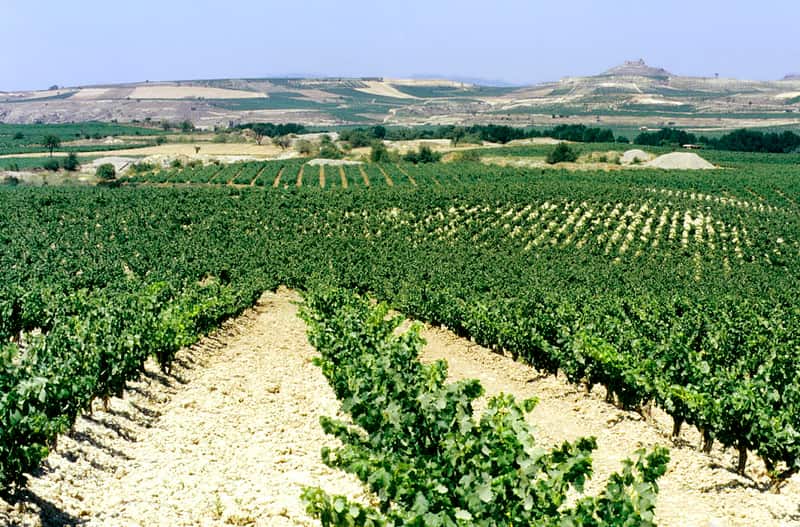
Rioja
Spain’s best-known region. Classic Rioja is Tempranillo aged in oak: red fruit, vanilla, spice. Traditional producers age their Reservas and Gran Reservas for years before release, so a Gran Reserva on the shelf is ready to drink.
Ribera del Duero
Tempranillo again (locally called Tinto Fino), grown high on the Castilian plateau: darker, firmer and more powerful than Rioja. Made for roast lamb and aged cheese.
Manchego PDO 12 months aged (reserve)
LalolaGourmet · La Mancha · Wedge
Twelve months gives Manchego its nutty, caramel depth and a crumbly bite. The one to serve if you want people to ask 'which cheese is this?'.
Why we like it
- PDO: real Manchega sheep milk
Keep in mind
- Too firm for sandwiches
Priorat
A small region of steep slate hillsides in Catalonia producing concentrated reds from old Garnacha and Cariñena vines. Big, mineral, often expensive.
Rías Baixas and Rueda: the whites
Albariño from Rías Baixas, on the rainy Galician coast, is fresh, aromatic and slightly saline — the natural partner for the tins made on the same coast. Verdejo from Rueda is crisper and more herbal, a great everyday white with tapas.
Ramón Peña mussels in escabeche 16/20 (set of 4 × 110 g)
Ramón Peña · Galician rías · 4 tins
Galician mussels in escabeche — a tangy sauce of oil, vinegar and paprika. A classic of Spanish vermouth hour.
Why we like it
- A benchmark Galician canner
Keep in mind
- Tangy sauce: not for everyone
→ Types of Spanish tinned fish
Jerez: sherry
The fortified wines of the Jerez triangle in Andalusia, from bone-dry fino to syrupy Pedro Ximénez. They deserve their own guide. → Sherry explained
Tío Pepe Fino Sherry (75cl)
González Byass · Jerez de la Frontera, Cádiz · 75cl bottle
The world's best-known fino: bone dry, crisp and slightly salty. The classic glass with ibérico ham, almonds and olives — serve it well chilled.
Why we like it
- Bone dry and saline: made for ham
- Easy to find, consistent every year
Keep in mind
- Drink within a few days of opening
Cava
Spain’s sparkling wine, made by the same traditional method as Champagne, mostly in the Penedès area near Barcelona. → Cava explained
Freixenet Cordon Negro Brut Cava (75cl)
Freixenet · Sant Sadurní d'Anoia, Catalonia · 75cl bottle
The famous black bottle: a crisp, dry cava made by the traditional method. An easy, affordable fizz for tapas and parties.
Why we like it
- Traditional method at an everyday level
- Dry: cuts through salty and fried food
Keep in mind
- Simple rather than complex: for everyday, not special occasions
Next: pair it
→ What to drink with jamón, Manchego and tins
Please drink responsibly. You must be 18 or over to buy alcohol in the UK.
Sources: Spain’s Wine Law (Ley 24/2003, BOE) · Consejo Regulador Jerez-Xérès-Sherry · D.O. Cava regulatory council