What Is Spanish Chorizo? Chorizo vs Salchichón vs Lomo vs Fuet
Spanish chorizo explained: how it differs from Mexican chorizo, salchichón, lomo and fuet, which you eat raw or cook, and how to serve them on a tapas board.
Heads up: this guide contains affiliate links. If you buy through them we may earn a small commission, at no extra cost to you. We don't accept free products or paid placements. How we choose products.
Spanish chorizo is a cured pork sausage seasoned with pimentón (Spanish paprika) and garlic. The paprika gives it its red color and smoky, sweet or spicy flavor. Most Spanish chorizo is dry-cured and ready to eat in thin slices, like salami. That’s the big difference from Mexican chorizo, which is raw and has to be cooked.
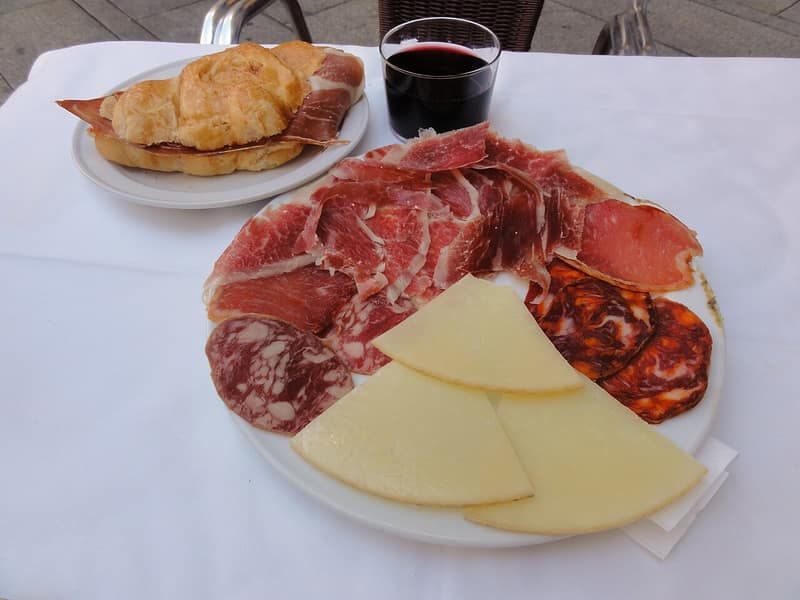
Spanish cured meats at a glance
| Chorizo | Salchichón | Lomo | Fuet | |
|---|---|---|---|---|
| What it is | Sausage of minced pork | Sausage of minced pork | A whole cured pork loin | A thin, long sausage |
| Key seasoning | Pimentón (paprika) and garlic | Black pepper, no paprika | Paprika and garlic marinade | Black pepper |
| Color | Deep red | Pink with white fat | Dark red, lean | Pale, with a white bloom |
| Taste | Smoky, savory; sweet or spicy | Mild, peppery | Lean, delicate | Mild, slightly tangy |
| How to eat it | Sliced; fresh chorizo is cooked | Sliced | Very thin slices | In rounds, skin removed |
| Where it’s typical | All of Spain | All of Spain | All of Spain | Catalonia |
Want to taste it? Our pick to start with:
Fermín Charcuterie Sampler (acorn-fed ham, chorizo, salchichón, lomo)
Fermín · La Alberca, Salamanca · 4 small packs
The easiest 'Spanish bar at home' kit: the ham plus the three classic Ibérico cured sausages. Portions are small — it's a tasting, not dinner.
Why we like it
- Ham plus the three classic Ibérico sausages
- The easiest 'Spanish bar at home' kit
Keep in mind
- Small portions: a tasting, not dinner
Best for: Tapas night, trying everything once
Price and availability on Amazon.com
Spanish chorizo vs Mexican chorizo
- Spanish chorizo is usually cured: firm, sliceable and ready to eat. Its flavor comes from pimentón and garlic.
- Mexican chorizo is fresh: soft, raw ground pork seasoned with chiles and vinegar, sold to be cooked and crumbled into eggs, tacos or potatoes.
- Spain also has fresh chorizo for cooking (chorizo fresco or para cocinar), used in stews and grilled. If the label says “fresco” or “para cocinar”, cook it.
You can’t swap them one for one: a cured Spanish chorizo won’t crumble in a pan, and a raw Mexican chorizo can’t be sliced for a board.
Chorizo vs salchichón
They look alike, but the seasoning is different. Chorizo is red because of the paprika; salchichón has none. It is seasoned mainly with black pepper, so it is paler, milder and closer to an Italian salami. On a tapas board, they work well together: one smoky, one peppery.
What is lomo?
Lomo (lomo embuchado) isn’t a sausage at all. It’s a whole pork loin, marinated in paprika and garlic, stuffed into a casing and cured. It’s the leanest of the Spanish cured meats and is sliced very thin. In its Ibérico de bellota version, it is one of the products covered by Spain’s Ibérico quality standard, with the same colored labels as the ham. → Iberico ham labels explained
Fermín Sliced Lomo Ibérico de Bellota (2 oz)
Fermín · La Alberca, Salamanca · Pre-sliced cured loin
Cured Ibérico loin: leaner, paprika and garlic on the edge. Many Spaniards like it as much as the ham and it's usually cheaper.
Fuet vs chorizo: what’s the difference?
The difference is the paprika. Chorizo is seasoned with Spanish pimentón, which makes it red and smoky; fuet has no paprika, just salt and black pepper, so it’s pale, mild and peppery.
Fuet is a long, thin Catalan sausage, mild and peppery, often covered in a natural white bloom. You peel off the skin and cut it into rounds: an easy snack and a favorite with children.
Ibérico chorizo and salchichón
Chorizo and salchichón can be made from white pigs or from Ibérico pigs. The Ibérico versions, especially de bellota, are richer and more marbled, with fat that melts on the tongue, much like Ibérico ham. Spain’s official color labels cover Ibérico ham, shoulder, loin and meat; for chorizo and salchichón, read the label for “Ibérico” and “bellota”.
How to serve them
- At room temperature: take them out of the fridge 20–30 minutes before. Cold fat has little flavor.
- Thin slices, single layer: a few slices of each on a plate, with bread, olives and Manchego.
- Peel the casing of chorizo and salchichón if it’s thick or not edible (it usually comes off easily).
- With a drink: a dry fino, a young Rioja or a cold beer. → What to drink with tapas
The easiest way to taste them side by side is a sampler with all of them:
Fermín Charcuterie Sampler (acorn-fed ham, chorizo, salchichón, lomo)
Fermín · La Alberca, Salamanca · 4 small packs
The easiest 'Spanish bar at home' kit: the ham plus the three classic Ibérico cured sausages. Portions are small — it's a tasting, not dinner.
Why we like it
- Ham plus the three classic Ibérico sausages
- The easiest 'Spanish bar at home' kit
Keep in mind
- Small portions: a tasting, not dinner
Best for: Tapas night, trying everything once
Price and availability on Amazon.com
Fermín Charcuterie Sampler + Manchego (chorizo, salchichón, lomo, 8 oz Manchego)
Fermín · Spain · 3 small packs + cheese wedge
No ham in this one, but it's the most complete board for the price and travels well as a gift. Pair it with one of the sliced hams above.
Why we like it
- A complete board: three cured meats and Manchego
- Travels well as a gift
Keep in mind
- No ham in the box
Keep reading
→ Iberico vs Serrano ham · 10 easy Spanish tapas with no cooking · A Spanish tapas bar at home
Sources: Spain’s Ibérico quality standard (Real Decreto 4/2014, BOE)