What Do Spaniards Eat at Christmas? Food Traditions from Nochebuena to Reyes
The Spanish Christmas table, from the Nochebuena dinner and turrón to the 12 grapes and roscón de Reyes, plus what you can serve at home this year.
Heads up: this guide contains affiliate links. If you buy through them we may earn a small commission, at no extra cost to you. We don't accept free products or paid placements. How we choose products.
In Spain the big Christmas meal is on Christmas Eve, Nochebuena (December 24), and it usually starts late, around 9 or 10 p.m. The table opens with jamón, cheese and seafood, moves on to a roast or fish, and ends with turrón and polvorones. Then the season keeps going: the 12 grapes at midnight on New Year’s Eve and the roscón de Reyes on January 6.
The Spanish Christmas calendar at a glance
| Date | Name | What’s on the table |
|---|---|---|
| Dec 24 | Nochebuena (Christmas Eve) | The main family dinner: starters, seafood, a roast, sweets |
| Dec 25 | Navidad | Lunch with leftovers, or a stew like cocido or escudella in Catalonia |
| Dec 31 | Nochevieja (New Year’s Eve) | Another big dinner, then 12 grapes at midnight |
| Jan 6 | Reyes (Epiphany) | Gifts for children and roscón de Reyes for breakfast |
The starters: jamón, cheese and seafood
Almost every Spanish Christmas table starts with a few plates in the middle to share, tapas-style:
- Jamón ibérico, sliced thin and served at room temperature. It’s the one thing families splurge on. → How to carve a jamón
- Cured meats: chorizo, salchichón and lomo. → Spanish cured meats explained
- Manchego and other cheeses, often with membrillo. → Build a Spanish cheese board
- Seafood: boiled prawns (langostinos or gambas) are a Christmas classic, along with good tinned fish like bonito ventresca, mussels or clams. → How to serve conservas
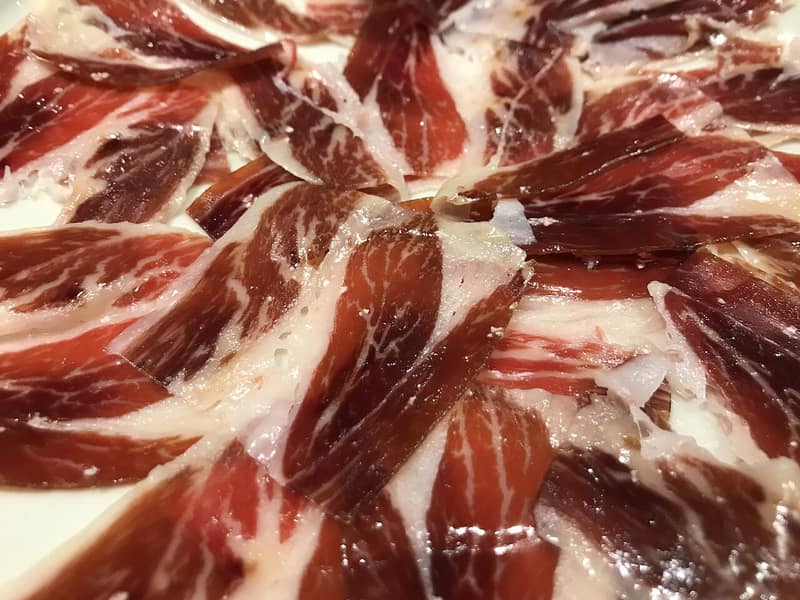

Cinco Jotas Hand-Carved Jamón Ibérico de Bellota (3 oz)
Cinco Jotas (5J) · Jabugo, Huelva · Pre-sliced, hand-carved style, vacuum pack
The benchmark most Spaniards would name first. Jabugo style: intense, long, savory. Buy it when you want the 'this is why people rave about it' moment — not for a big party.
Why we like it
- The reference brand in Spain
- Hand-carved style slices
- Intense Jabugo flavor
Keep in mind
- Premium price for 3 oz
- Too strong for some first-timers
Best for: A first taste of the top tier, a special gift
Price and availability on Amazon.com
Fermín Charcuterie Sampler (acorn-fed ham, chorizo, salchichón, lomo)
Fermín · La Alberca, Salamanca · 4 small packs
The easiest 'Spanish bar at home' kit: the ham plus the three classic Ibérico cured sausages. Portions are small — it's a tasting, not dinner.
Why we like it
- Ham plus the three classic Ibérico sausages
- The easiest 'Spanish bar at home' kit
Keep in mind
- Small portions: a tasting, not dinner
Best for: Tapas night, trying everything once
Price and availability on Amazon.com
Manchego D.O.P. duo: 3-month semi-cured + 12-month aged (1 lb) with picos
Casa Mayor · La Mancha · 2 wedges + breadsticks
The best way to learn Manchego: taste a young, buttery wedge next to an aged, nutty one. Comes with picos, the crunchy Spanish breadsticks.
Why we like it
- Side-by-side tasting built in
- Includes picos
Keep in mind
- Smaller amount of each style
Best for: First Manchego, tasting at home
Price and availability on Amazon.com
Ortiz Ventresca white tuna belly in olive oil (3.88 oz)
Conservas Ortiz · Basque coast, Cantabrian Sea · 110 g tin
Ventresca is the belly: the richest, silkiest part of the fish. Eat it straight from the tin with good bread — no mayo allowed.
Why we like it
- The most prized cut of tuna
Keep in mind
- Small tin for the price
Conservas de Cambados Galician seafood gift box
Conservas de Cambados · Cambados, Galicia · Gift box
An assortment of Galician tins in a presentable box: the easiest good gift for anyone who likes seafood.
Why we like it
- An assortment of Galician tins in a presentable box
- Keeps for months: easy to buy early
Keep in mind
- Not for anyone who dislikes seafood
The main course
It depends on the region and the family. The classics are roast lamb or suckling pig in Castile, sea bream (besugo) in the north and in Madrid, stuffed turkey in Catalonia and seafood soups along the coast. There is no single national dish, like turkey for Thanksgiving.
The sweets: turrón, polvorones and marzipan
- Turrón is the Christmas sweet. There are two classics: hard Turrón de Alicante (whole toasted almonds in honey nougat) and soft Turrón de Jijona (ground almonds and honey, almost like a paste). Both are protected geographical indications (PGI) from the province of Alicante.
- Polvorones and mantecados are crumbly almond shortbreads, wrapped one by one; Estepa in Andalusia is the best-known town for them.
- Mazapán (marzipan), with Toledo’s the most famous.
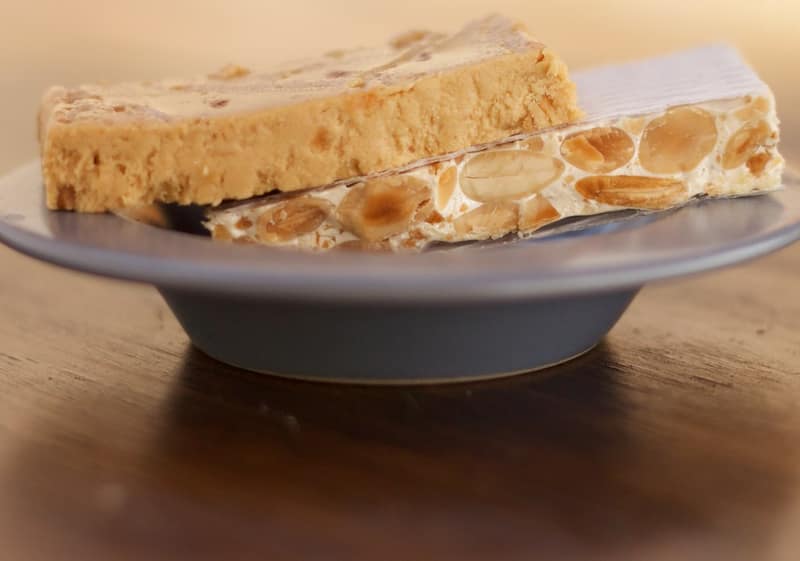
They come out on a big platter after dinner, with coffee and a glass of something sweet, and stay on the table until January.
New Year’s Eve: the 12 grapes
At midnight on December 31, Spaniards eat one grape for each of the 12 chimes of the clock, watching the bells of Madrid’s Puerta del Sol on TV. Finishing all twelve in time is meant to bring a lucky year. Then comes the toast, usually with cava. → Cava explained (Please drink responsibly; 21+ in the US.)
January 6: roscón de Reyes
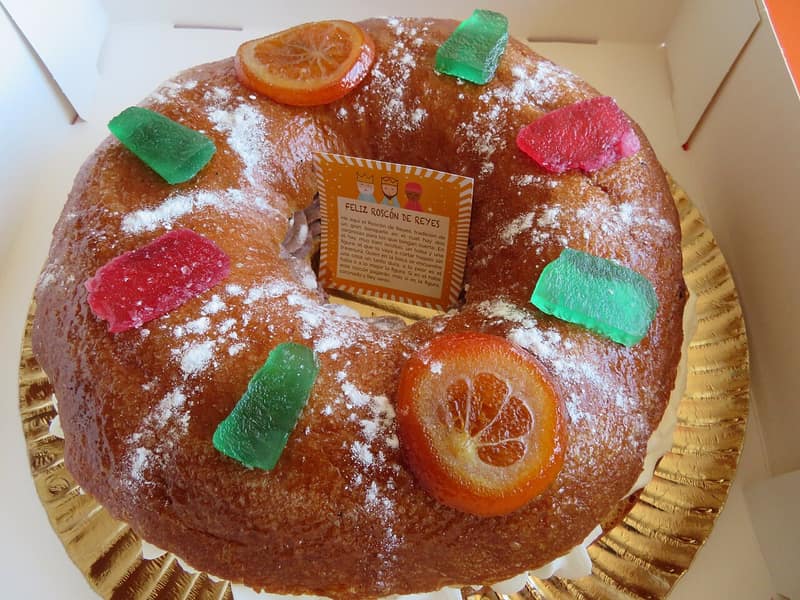
The season ends on Epiphany with the roscón de Reyes, a ring-shaped sweet bread with candied fruit, often filled with cream. Inside are a small figurine and a dried bean: whoever finds the figurine is “king” for the day, and whoever finds the bean pays for next year’s roscón.
Bring it home this year
You don’t need the whole menu. A Spanish-style Christmas Eve at home is three things done well: jamón at room temperature, a good Manchego and one or two tins of premium seafood, with bread, olives and almonds. Put them out while the main course is in the oven.
→ The full plan, with quantities: A Spanish tapas menu for a holiday party · Giving instead of hosting? The best Spanish food gifts for Christmas