Pan con Tomate with Jamón: The Catalan Classic, Done Right
How to make pan con tomate (pa amb tomàquet) the Catalan way: the right bread and tomatoes, rub or grate, how much oil and salt, and topping it with jamón.
Heads up: this guide contains affiliate links. If you buy through them we may earn a small commission, at no extra cost to you. We don't accept free products or paid placements. How we choose products.
Pa amb tomàquet in Catalan, pan con tomate in Spanish: bread, tomato, olive oil and salt. In Catalonia it’s on the table at breakfast, lunch and dinner, and it’s the base for half the tapas in Spain. It only has four ingredients, so each one matters.
The ingredients
| Ingredient | What to use | Why |
|---|---|---|
| Bread | A rustic loaf or ciabatta with an open crumb | It needs holes to catch the tomato |
| Tomato | Very ripe, juicy tomatoes (in Spain, tomates de colgar) | Flavor comes from the juice, not the skin |
| Olive oil | A fruity extra virgin | It’s a main ingredient, not a garnish |
| Salt | Flaky or fine sea salt | A pinch brings the tomato to life |
| Garlic (optional) | One clove, halved | Some Catalans use it, many don’t |
Step by step
- Slice the bread about ½ inch thick and toast or grill it until crisp outside, still soft inside.
- Optional: rub the hot toast lightly with a halved garlic clove.
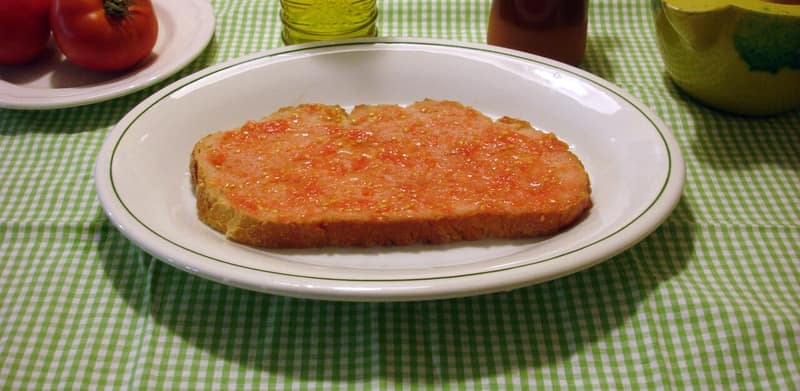
- Rub the tomato. Cut a ripe tomato in half and rub the cut side firmly over the bread until only the skin is left in your hand. The bread should look pink and wet, not covered in chunks.
- Drizzle olive oil generously.
- Add a pinch of salt.
- Eat it right away. Pan con tomate waits for no one.
Rub or grate? Rubbing is the traditional home method. Many bars grate the tomato and spoon the pulp on top instead, which works better when tomatoes are less ripe. Both are fine.
With jamón
Lay a slice or two of ibérico on top after the oil and salt, so the fat warms slightly on the bread. This is one of the great combinations in Spanish food.
Fermín 100% Ibérico Acorn-Fed Ham, sliced (2 × 2 oz)
Fermín · La Alberca, Salamanca · Pre-sliced, 2 small packs
Fermín was the first Spanish producer cleared to export Ibérico pork to the US, and it's the brand you'll find most consistently in stock. Salamanca style: rounder and gentler than Jabugo — an easy first bellota.
Why we like it
- Most reliable stock in the US
- Gentle, sweet Salamanca style
- Small packs: no waste
Keep in mind
- Machine-sliced look, less 'bar-like'
Best for: First-time buyers, reliable availability
Price and availability on Amazon.com
The oil
A fruity, mild Arbequina lets the tomato shine; a peppery Picual makes it bolder. Use your best bottle here.
Castillo de Canena Family Reserve Arbequina Extra Virgin Olive Oil (500 ml)
Castillo de Canena · Canena, Jaén · 500 ml glass bottle
Arbequina is the gentle one: fruity, green apple and almond, very little bitterness. The easiest first 'real' olive oil for most people.
Why we like it
- Mild and fruity: easy to love
- Great with fish and vegetables
Keep in mind
- Less complex than Picual
Best for: First premium EVOO, fish, desserts
Price and availability on Amazon.com
Other toppings
- Bonito or anchovies from a good tin.
- Manchego in thin slices.
- Lomo or chorizo.
Ortiz Bonito del Norte white tuna in olive oil (3.95 oz tin)
Conservas Ortiz · Basque coast, Cantabrian Sea · 112 g oval tin
The tin that shows what Spanish tuna is: firm, pale, moist albacore caught one by one and hand-packed in olive oil. Nothing like supermarket tuna.
Why we like it
- Line-caught albacore, hand-packed
- Family canner since 1891
Keep in mind
- Pricier than regular tuna — worth it
Best for: Salads, toast, first premium tin
Price and availability on Amazon.com
Common mistakes
- Soggy bread: you toasted it too little or used soft sandwich bread.
- Bland: the tomatoes weren’t ripe enough, or you forgot the salt.
- Tomato chunks everywhere: rub harder, or grate and strain the pulp.
→ More ideas: 10 easy Spanish tapas