10 Easy Spanish Tapas with No Cooking (Just Good Ingredients)
Ten classic Spanish tapas you can make in 20 minutes without cooking: jamón, Manchego, gildas, tinned mussels, bonito, pan con tomate and more.
Heads up: this guide contains affiliate links. If you buy through them we may earn a small commission, at no extra cost to you. We don't accept free products or paid placements. How we choose products.
In a Spanish bar, most tapas aren’t cooked to order. They’re assembled: sliced, opened, drizzled. That’s why you can recreate them at home in twenty minutes — as long as the ingredients are good. Here are ten classics, from the simplest up.
1. A plate of jamón
The king of tapas. Thin slices, laid loosely on a plain plate, at room temperature so the fat turns glossy. Nothing else on the plate.
Jamón de Bellota 100% Ibérico D.O.P. Jabugo, hand-cut, vacuum packed
PDO Jabugo · Sierra de Huelva (PDO Jabugo) · Hand-cut slices, vacuum pack
Carries the Jabugo Protected Designation of Origin seal — useful if you want to taste the intense Jabugo style and compare it with a Salamanca ham.
Best for: Comparing origins, Jabugo fans
Price and availability on Amazon.co.uk
→ What real ibérico ham tastes like
2. Manchego in triangles
Cut the wedge into thin triangles, rind off. Aged Manchego (around 12 months) has the nutty, slightly crystalline bite that works best as a tapa. A drizzle of olive oil on top is a common bar touch.
Manchego PDO 12 months aged (reserve)
LalolaGourmet · La Mancha · Wedge
Twelve months gives Manchego its nutty, caramel depth and a crumbly bite. The one to serve if you want people to ask 'which cheese is this?'.
Why we like it
- PDO: real Manchega sheep milk
Keep in mind
- Too firm for sandwiches
3. Mussels in escabeche, straight from the tin
Open the tin, don’t drain it, serve with a fork and a bowl of crisps. That’s the classic Spanish vermouth-hour snack — the escabeche (a paprika and vinegar marinade) is half the pleasure, so dip bread in it.
Ramón Peña mussels in escabeche 16/20 (set of 4 × 110 g)
Ramón Peña · Galician rías · 4 tins
Galician mussels in escabeche — a tangy sauce of oil, vinegar and paprika. A classic of Spanish vermouth hour.
Why we like it
- A benchmark Galician canner
Keep in mind
- Tangy sauce: not for everyone
4. Bonito with olive oil
Open a tin of Bonito del Norte, lift out the pieces, add a little of its oil and a pinch of flaky salt. With a few slices of tomato or roasted red pepper it becomes a small salad.
Ortiz Bonito del Norte white tuna in olive oil (5 × 112 g)
Conservas Ortiz · Basque coast, Cantabrian Sea · 5 × 112 g tins
The tin that shows what Spanish tuna is: firm, pale, moist albacore caught one by one and hand-packed in olive oil.
Why we like it
- Line-caught albacore, hand-packed
- Family canner since 1891
Keep in mind
- Pricier than regular tuna — worth it
Best for: Salads, toast, first premium tin
Price and availability on Amazon.co.uk
5. The gilda
An anchovy, a green olive and a pickled guindilla pepper threaded on a toothpick. Born in a San Sebastián bar in the 1940s, it’s salty, sour and a little spicy — the perfect bite with a drink. → Where the gilda was invented
6. Pan con tomate
Toasted bread rubbed with ripe tomato, olive oil and salt — alone or under a slice of ham. It deserves its own guide. → Pan con tomate, the Catalan way
7. Lomo and chorizo
Cured Ibérico loin (lomo) is leaner than ham and very elegant; chorizo adds paprika and colour. Serve a few slices of each on the same board.
Lomo Ibérico, sliced (100 g)
The Spanish Hamper · Spain · Pre-sliced cured loin, 100 g
Cured Ibérico loin: leaner, with paprika and garlic on the edge. Many Spaniards like it as much as the ham and it's usually cheaper.
8. Olives
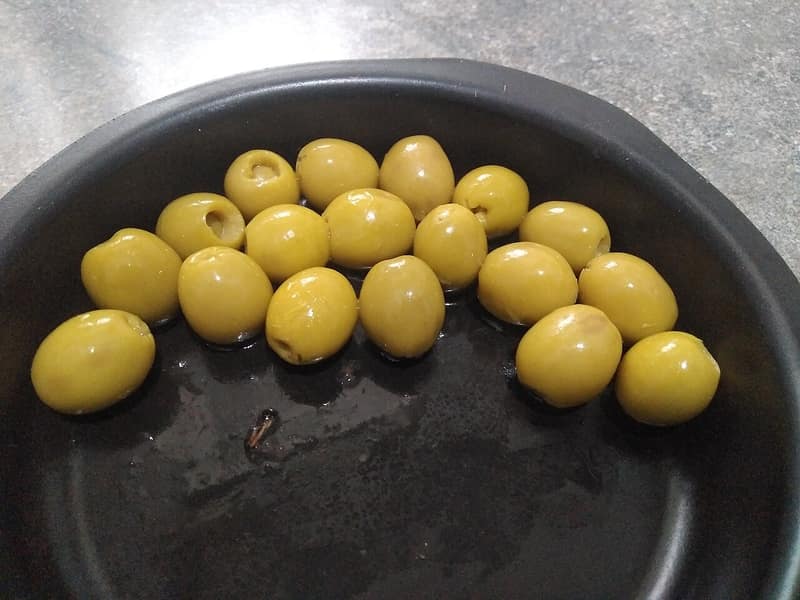
Buy good ones (Manzanilla or Gordal) and dress them: a splash of olive oil, a strip of orange peel, a crushed garlic clove and a pinch of oregano, an hour before serving.
9. Marcona almonds
Fried and salted Spanish almonds, flatter and rounder than the usual ones. Warm them for five minutes in a dry pan before serving.
10. Bread and olive oil
A small bowl of good extra virgin olive oil and crusty bread. It sounds too simple — until you taste a fresh, fruity Spanish oil.
Castillo de Canena Family Reserve Arbequina Extra Virgin Olive Oil (500 ml)
Castillo de Canena · Canena, Jaén · 500 ml glass bottle
Arbequina is the gentle one: fruity, green apple and almond, very little bitterness. The easiest first 'real' olive oil for most people.
Why we like it
- Mild and fruity
Keep in mind
- Less complex than Picual
How to put them together
- Pick five or six, not all ten. Variety beats quantity.
- Everything at room temperature except the drinks. Take ham and cheese out of the fridge 30 minutes before.
- Small plates, not one big board. It’s how bars serve them, and it keeps things moving.
- Something cold to drink. → What to drink with tapas
→ Chorizo, salchichón, lomo or fuet? Spanish cured meats explained
→ Putting it all on one board? How to make a Spanish charcuterie board